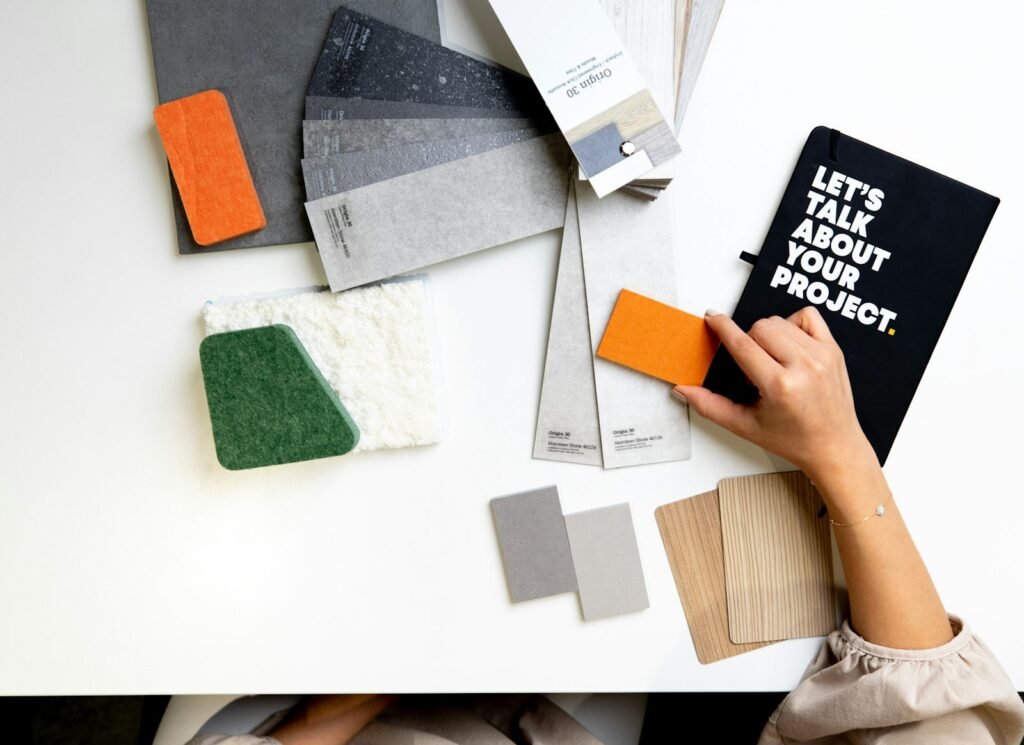
Going from designer to art director means you stop being the person who makes the layout and become the person who decides what the layout should be. Most designers get there by taking on direction work before they hold the title. This guide shows what changes, how to tell you are ready, and what to do next.
The 30-Second Answer
You make the move by proving you can direct other people’s work. Waiting for a promotion to hand you that chance rarely works.
The U.S. Bureau of Labor Statistics lists 5 years or more in a related job, such as graphic designer, as the typical experience for art directors. So expect to build several years of solid craft first. Then take on projects where you write the concept, review other people’s work and present the result. Finally, put those decisions in your portfolio.
Designer to Art Director Is a Change in What You Do All Day
The Bureau of Labor Statistics describes art directors as the people who choose the visual style and imagery for a project. They decide how to show a concept, direct other designers and artists, review their work, and manage budgets and timelines.
Made Good Designs puts the shift in one line: art directors spend “fewer hours in the file, more hours shaping concepts.” You will still need sharp design judgment. But you will spend more time in meetings, reviews and pitches than in Figma or Illustrator.
Here are the numbers, with the caveats. BLS reports a median pay of $114,850 a year (May 2025) and 140,200 jobs. It projects 4% growth from 2025 to 2035, which it calls as fast as average. Pay varies by region, industry and company size. Treat any average as a starting point, as Made Good Designs also advises.
Four Signs You Are Ready to Start Directing
You do not need all four at once. But if none of them describes you yet, build those first.
1. Teammates ask you to look at their work before they send it
When people pull you into their files, they trust your eye. Notice how often it happens. If you give feedback once or twice a week, you are already doing a small version of the job.
2. You can explain why a layout works in words others can use
“It feels cleaner” is not direction. “Tighter line spacing and one accent color will make the price stand out” is. Try describing a design you like so a stranger could rebuild the feeling without seeing it. If they would need to ask what you mean, keep practicing.
3. You have led a project from brief to delivery
Directing means owning the result from the first brief to the final files. You decided the concept, you gave out the pieces, and you answered for how it turned out. One finished project like that is worth more than five years of tasks handed to you.
4. You can defend your choices to someone who disagrees
A client or a manager will push back on your concept. Can you stay calm and explain your reasons? You build this skill by presenting your own work and writing down the questions you got. Art directors do it every week.
Take 6 Steps Toward Art Director Before You Have the Title
No one will hand you direction work on day one. So go and find it. Each step below fits around a full-time design job.
1. Build the craft until you can critique anyone’s work
You cannot direct what you cannot judge. Typography, color, spacing and hierarchy have to be strong enough that you can say what is wrong with another designer’s layout and how to fix it. If your visual foundation has gaps, close them first. Everything else sits on top.
2. Volunteer to write the concept for your next project
Next time a project starts, ask to write the one-page concept. Describe the mood, the visual language and what you will leave out. Then share it before anyone opens a file. A written concept is the clearest proof that you think like a director.
3. Guide a junior designer or an intern through one project
Brief them, give feedback in rounds and decide when the work is done. This is the part many designers never practice, and it is half of the job. If your company has no juniors, offer to mentor a student or a volunteer on a nonprofit project.
4. Practice presenting and taking feedback out loud
Present your work to someone who will argue with you. Record yourself if you can stand it. Count how often you say “I like it” instead of giving a reason. The design association RGD tells designers to collaborate with copywriters, illustrators, production coordinators and account managers, because direction is a team sport.
5. Study campaigns and brands, then write down what you notice
The RGD article on this move recommends keeping a collection of work you admire and reinterpreting it. Pick 1 campaign a week. Write down the concept, the audience and the 3 choices that hold it together. After a month you will have 4 written critiques and a sharper eye.
6. Tell your manager you want to direct projects
Many designers take on the work before the title arrives, so say what you want out loud. Ask which upcoming project you could direct and what a manager would need to see from you first. If the answer is “nothing here,” you have learned something useful about whether to look elsewhere.
Show How You Directed the Work in Your Portfolio
Hiring managers see polished screens from every designer. What they cannot see is your judgment, so show it. For each case study, add four things: the brief, the concept you chose and why, who you guided, and what happened after.
Put the options you rejected next to the final design. A page that says “we tried three directions and picked this one because the audience was older and needed bigger type” shows direction. A page with only the final screens does not.
A Senior Designer Role Can Pay Well and Fit You Better
Art director is not the only good outcome. Made Good Designs says a senior or specialist craft track can be just as rewarding and well paid. It also names one move as the worst: switching into management mainly for pay and losing the hands-on work you enjoy.
Ask yourself what you want your week to look like. If you love making, a senior designer role may fit better. If you love steering a whole project, direction will.
You may also want the advertising route, where an art director pairs with a copywriter. The RGD article points to Humber Polytechnic’s Advertising Art Direction graduate certificate for that path. Check details on their site before you decide. Our programs fit designers who want to direct visual work for brands, products and their own clients.
Questions About Going From Designer to Art Director
How long does it take to go from designer to art director?
There is no fixed timeline. BLS lists 5 years or more in a related job as typical experience. Your own pace depends on how soon you can show finished projects you directed.
Do you need a degree to become an art director?
BLS lists a bachelor’s degree as the typical entry education. We think your portfolio matters most, but some employers do filter by degree. Read the job posts you want before you decide.
Is art director a higher title than senior designer?
Usually, yes. Made Good Designs places art directors at mid to senior level and above, with creative directors higher. Titles differ by company, so read the job description and not just the title.
Can you move into art direction if you design interfaces?
Yes, the skills carry over: concept, critique, and leading other people. Some product teams use different titles for similar work. Look at what the role asks you to do.
Key Takeaways
- Directing means writing the concept and guiding other people’s work. You make fewer files and more decisions.
- BLS lists 5 years or more in a related job as typical experience. Plan to build solid craft before you ask for the title.
- Take on direction work before you have the title. Write concepts, guide a junior designer and present to people who push back.
- Show your decisions in your portfolio. Add the brief, the concept, who you guided and the options you rejected to each case study.
Get Feedback on Your Direction From a Senior Designer
If you are a working designer with the craft but no direction work to show, we built two programs for that gap. Our Art Direction course teaches designers who already have a design foundation how to turn a brief into a clear visual direction and explain it in words. It costs $599 with 5 instructor sessions or $299 self-study, and most students finish in 6 to 10 weeks. For the portfolio side, our Portfolio School includes a Leadership Program for designers moving toward senior and art director roles, $3,200 for 3 months and 16 sessions. It is best for portfolio focus that actually lands you the job: 92.5% of graduates from completed cohorts were employed, measured at time-to-employment (we report this ourselves, and no outside auditor has checked it). If you are unsure which fits, book a free clarity call and talk to a real human about your fit. We will tell you directly if another school suits you better.