AI brand design tools can give you a logo, a color palette and a business name in minutes. What they cannot give you is the reason any of it fits the business. That reason is what clients pay a brand designer for, and it is still your job.
The 30-Second Answer
Yes, AI can design parts of a brand. It drafts logos, palettes, names and mockups fast. It cannot work out what a business stands for, keep a mark the same across every touchpoint, or hand your client a logo they fully own.
So the brand design work that pays is moving toward strategy, judgment and systems. If you want a career in brand design, learn those first and let AI speed up the drafts. That is the order we teach in our Brand Identity Design course.
Most articles on this question come from agencies that sell branding. They all agree AI is fast and the results look generic.
Few of them tell you what that means if you want to do this work yourself, or what happens to ownership when a logo comes from a prompt. This guide covers both.
See What AI Brand Design Tools Do Well Today
Start with what works, because the speed is real. Tom Lawrie, a writer at the UK brand agency Threerooms, asked an AI model to build a brand from scratch. It laid out a strategy, suggested a name and presented the ideas neatly.
His summary: “AI can build a ‘NorthFrame’ in an afternoon.”
Try it and you will see the same thing. AI is useful for early exploration: a pile of logo sketches to react to, color options, mockups on packaging and signs, and resizing one asset into every format a campaign needs.
Use AI where a fast first draft saves you hours, and keep the decisions for yourself.
Notice Where AI Falls Short on a Real Brand
The same experiment showed the limits. Lawrie found the concepts underneath were flat, and the tool went along with whatever he asked without pushing back.
Consistency broke too. He wrote that “the logo was different in almost every image it generated.” A brand only works when customers see the same mark every time they meet it. A logo that changes between the website and the business card undoes that.
The agency leaders in an Advertising Week roundup add a second worry, which is sameness. When every business prompts the same tools, brands start to look and sound alike. The piece sums it up: “technology can scale creativity, but it can’t substitute for it.”
Check Who Owns a Logo That Came from a Prompt
This is the part most ranking articles skip, and it matters if you want to sell brand work.
In January 2025 the U.S. Copyright Office published Part 2 of its report on copyright and AI. Two of its conclusions are worth reading word for word:
“Copyright does not extend to purely AI-generated material, or material where there is insufficient human control over the expressive elements.”
“Based on the functioning of current generally available technology, prompts do not alone provide sufficient control.”
In plain terms, a logo you typed into a generator and delivered unchanged may have no copyright protection at all. Your client could pay for a mark a competitor is free to copy.
Copyright is also only one layer. Trademark law works differently, so a client with a real ownership question needs an intellectual property attorney. We are not lawyers, and this is not legal advice.
What you can control is how much of the final work comes from you - your sketches, your edits and your decisions. Sketch your own concepts, redraw anything you keep from a tool, and save your process files. That record shows your client what they paid for, and it makes a stronger case study.
This is the United States position. If your clients are in another country, look up how that country’s copyright office treats AI-generated work before you promise a client ownership.
Learn the Brand Design Work That Still Needs You
These are the parts of a brand project where your judgment does the work, each with a way to practice it.
1. Find Out What the Business Stands for Before You Draw
Every brand starts with discovery. You interview the owner, read what customers say, look at competitors, and decide what the business should feel like to the people it serves.
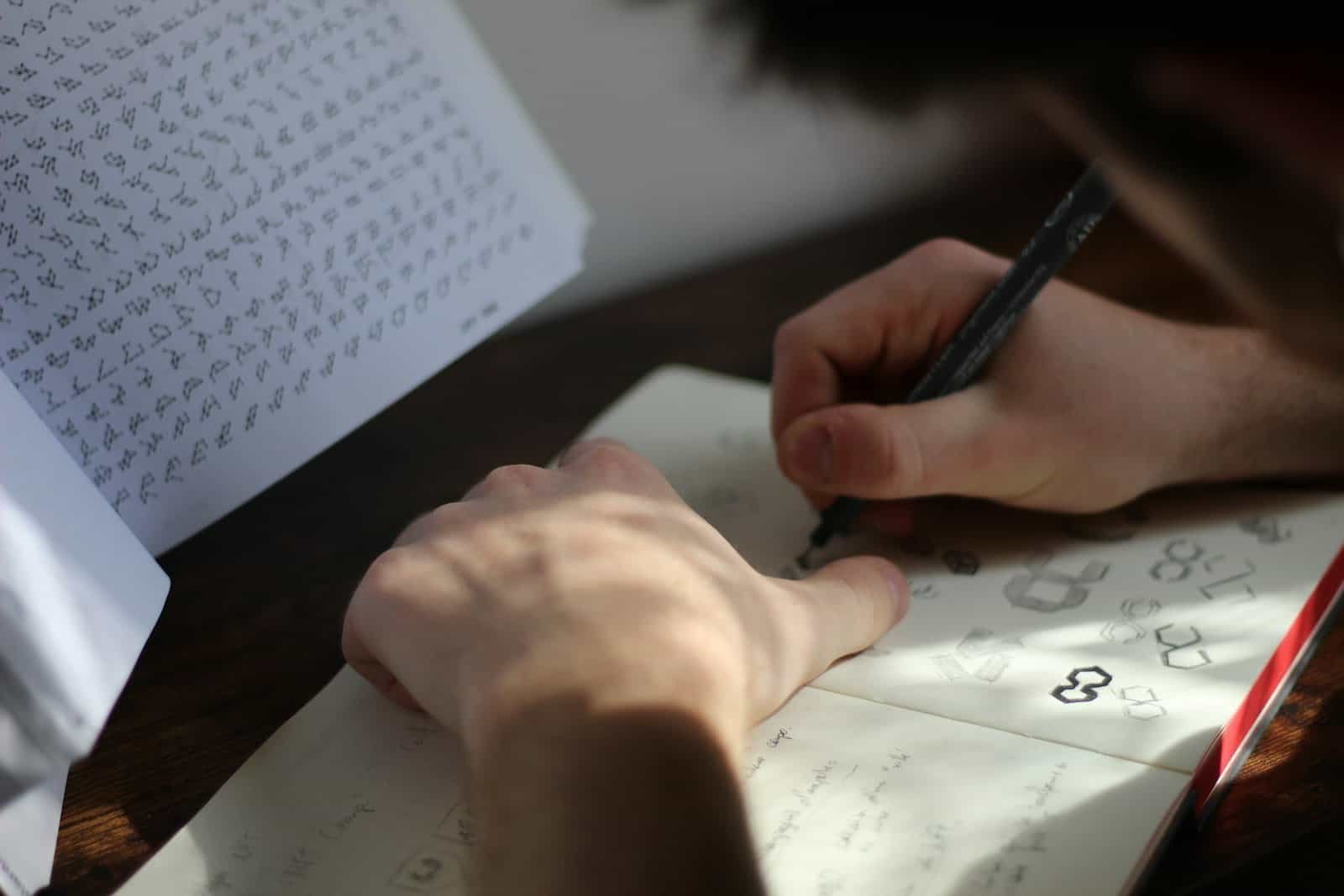
AI can summarize a stack of reviews. It cannot sit with a founder and hear the thing they never wrote down, like the customer they secretly wish they had.
Skip this step and the logo has nothing to stand on. A mark that looks good and says the wrong thing costs the client more than no mark at all, because they will end up paying to replace it.
Try it with a real business. Pick a local one and write a one-page brief: who they serve, what they want customers to feel, and how their competitors look. Then generate a set of AI logos and check how many of them fit your brief.
Research and discovery is where our Brand Identity Design course begins. You work through brand personality, story, touchpoints and moodboards before you draw anything, with an instructor checking your thinking.
2. Choose One Direction from the Pile and Explain Why It Fits
AI made options cheap. The scarce skill now is choosing. Every client will ask the same question at the presentation: why this one?
A good answer ties the choice back to the brief. “The rounded type feels friendly to first-time homebuyers, and the deep green separates us from the blue every bank in town uses.” A weak answer sounds like “I liked it best.” Clients can hear the difference, and so can hiring managers.
Try this. Generate a large batch of logo options for the brief you wrote, then pick one.
Write three sentences connecting it to the brief. Then write one line for each rejected option saying why it lost. If you cannot explain a choice in one sentence, you have not made it yet.
3. Build a System That Keeps the Logo the Same Everywhere
A brand identity is more than a logo. It is the logo plus color values, typefaces, photography rules and spacing rules, written down in a guidelines document the client’s team can follow.
AI produces single images and does not carry rules from one image to the next, which is why Lawrie’s logo kept changing. Your guidelines cover clear space, minimum size, exact color codes, type pairings and examples of what to avoid.
Practice it with the mark you chose. Write a two-page guideline, then apply the brand to a website header, a social profile picture, an invoice, a storefront sign and a package.
Every time a touchpoint needs a rule you did not write, add the rule. By the end you will have a real system.
4. Make the Mark Original Enough to Stand Apart
AI tools learn from what is already popular, so their output drifts toward the familiar. That works against the whole point of a brand, which is to be recognized at a glance.
Originality also connects to ownership. The more of the mark you draw and decide yourself, the more of it is your work.
Test it the way a customer would see it. Put your logo next to the logos of the biggest competitors in the category - shrink everything to the size of a phone icon - and show it to a friend for three seconds.
If they cannot pick yours out, redraw it. Run a reverse image search on your final mark as well, so you catch close matches before the client does.
Will AI Replace Graphic Designers Who Do Brand Work?
Some of the work is going away.
The U.S. Bureau of Labor Statistics projects graphic designer jobs to decline 2 percent from 2025 to 2035. It says directly that “automated design tools, such as artificial intelligence (AI), are projected to make graphic designers more productive and reduce the need for these workers.”
The same page still projects about 16,000 openings a year on average, and a median pay of $62,960 as of May 2025. These are U.S. figures for all graphic designers, including the ones who do brand work.
So the shrinking happens at the production end, where a designer gets paid to make many versions of one asset. The openings that remain go to designers who can run the strategy, the system and the client conversation. Your portfolio has to prove you can do those parts.
Showing that judgment is what our Portfolio School is built for. You work 1:1 with a senior designer every week to turn your projects into case studies that explain your choices.
It is best for portfolio focus that actually lands you the job: 92.5% of graduates from completed cohorts were employed, measured at time-to-employment. Pricing starts at $2,100.
We report the 92.5% figure ourselves, and no outside auditor has checked it.
Start with the Basics If You Have Never Designed Before
Brand identity work assumes you already understand type, color and layout. You need those basics to judge what an AI tool hands you, like why one typeface feels serious or why a color pairing looks cheap.
Our Brand Identity Design course is listed as intermediate to advanced. If you are brand new to design, start with our Visual Design Foundation course and come back to branding after it.
Frequently Asked Questions About AI Brand Design
Can AI Design a Logo for My Business?
It can produce logo drafts in minutes, and they are useful for exploring ideas.
Watch for three problems: the mark may not stay consistent, it may look like other brands, and under the U.S. Copyright Office’s current position a purely AI-generated logo may not be protected by copyright. For ownership questions, talk to an intellectual property attorney.
Is Brand Design Still a Good Career with AI?
Production work is shrinking, and the BLS projects a 2 percent decline for graphic designers from 2025 to 2035. The openings that remain favor designers who handle strategy, systems and clients. We cannot promise any job outcome, and we will not.
Key Takeaways
- AI brand design tools are fast at drafts and weak at decisions, so use them for exploration and keep the choices yourself.
- A logo made purely from a prompt may have no copyright protection in the United States, which matters to every client who pays for one.
- The work that still needs you is discovery, choosing a direction, building the system and making the mark original.
- Graphic design jobs are projected to shrink at the production end, so your portfolio has to show your strategy and your reasons.
Get Your Brand Decisions Checked by a Senior Designer
You can practice every step above on your own. The step most designers get wrong alone is choosing a direction and explaining why, because you get no feedback on a weak reason.
That is how you can spend months making polished logos that still do not win a client’s approval. We built our brand program around that step.
Learn to Lead a Client from Strategy to Style Guide
You learn to run discovery, build the logo, color and type system, and write a client-ready guidelines document, with an instructor reviewing your decisions.
That is our Brand Identity Design course, built for UI/UX designers who get asked to “do branding too” and for freelancers who want to offer branding as a service. The Full Program is $650 with 5 instructor sessions, and the self-study version is $299.
Turn Your Brand Project into a Portfolio That Gets You Hired
Good brand work only helps your career when a hiring manager can see your reasoning. Pair Brand Identity Design with Portfolio School for $3,750, or take Portfolio School on its own from $2,100. Career changers who need the whole path can start with the School of UI/UX Design, $7,080 all-in.
Find Your Starting Point on a Free Clarity Call
Not sure which one fits? Book a free clarity call and talk to a real human about your fit. If one of ours fits, we will point you to the program that gets your brand work in front of clients and hiring managers.